
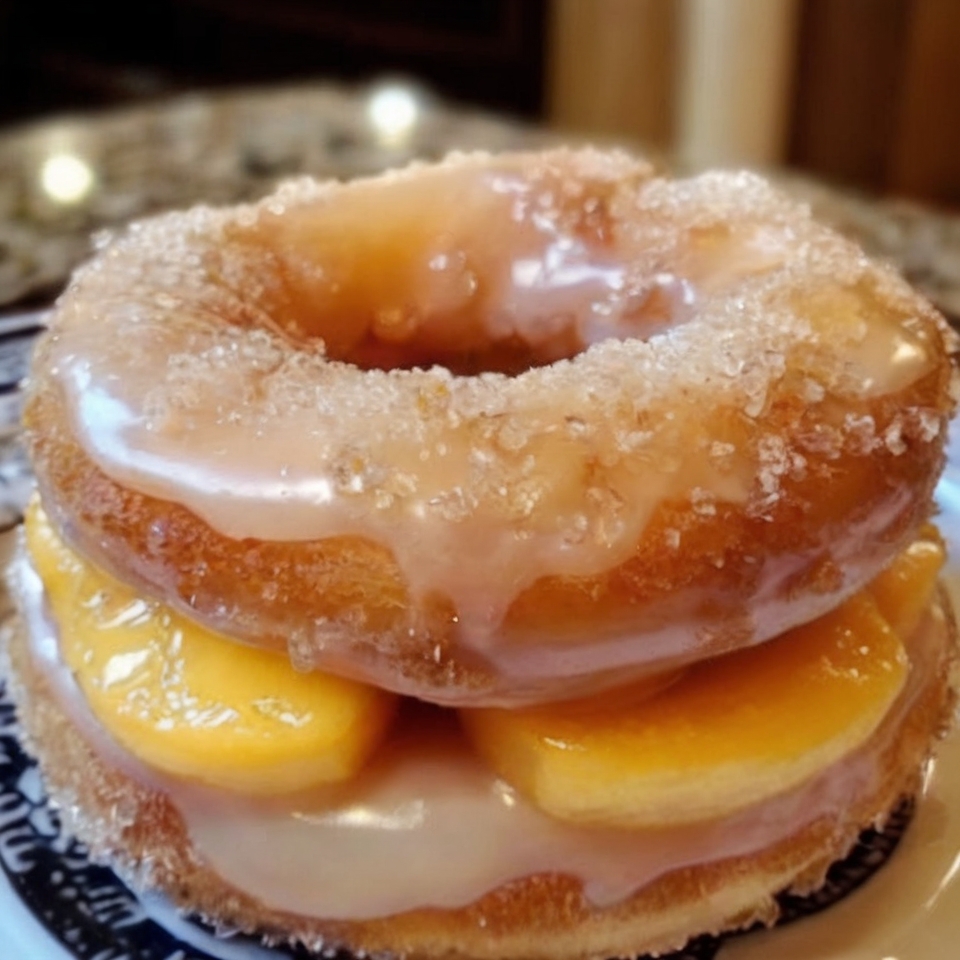
Classic Peach Cobbler Cheesecake Donuts combine three irresistible desserts into one indulgent treat. Fluffy fried donuts are filled with creamy cheesecake and sweet cinnamon‑spiced peach cobbler filling, then finished with a light vanilla glaze and a sprinkle of crunchy crumbs.
Why You Will Love This Recipe
This recipe brings together comforting flavors and exciting textures. The warm donut exterior, the silky cheesecake filling, and the fruity peach center create a dessert that feels both nostalgic and luxurious. It is simple enough for home bakers yet impressive enough to serve to guests.
Preparation and Cooking Time
Preparation time: 20 minutes
Cooking time: 10 minutes
Cooling and assembly: 15 minutes
Total time: approximately 45 minutes
Tools Needed
- Mixing bowls
- Electric mixer or hand whisk
- Small saucepan
- Heavy pot or deep fryer
- Slotted spoon or tongs
- Paper towels
- Knife for slicing donuts
- Cooling rack
Ingredients
For the Donuts
- 1 can refrigerated biscuit dough
- Vegetable oil for frying
For the Peach Cobbler Filling
- 1 can peach slices in syrup (15 oz)
- 1/4 cup packed light brown sugar
- 1 teaspoon ground cinnamon
- 1 tablespoon cornstarch
- 1 tablespoon water
For the Cheesecake Filling
- 8 ounces full‑fat cream cheese, softened
- 1/4 cup powdered sugar
- 1 teaspoon pure vanilla extract
- 1/4 cup heavy whipping cream
For the Topping
- 1/4 cup finely crushed graham crackers or biscuit crumbs
- 1/4 cup prepared vanilla glaze or donut glaze
- A pinch of ground cinnamon
Step‑by‑Step Instructions
Prepare the Peach Filling
In a small saucepan combine the peaches with their syrup, brown sugar, and cinnamon. Bring the mixture to a gentle simmer over medium heat. In a separate bowl mix cornstarch and water to create a slurry. Stir it into the peach mixture and cook for 2 to 3 minutes until the sauce becomes thick and glossy. Remove from heat and allow it to cool completely.
Make the Cheesecake Filling
In a mixing bowl beat the softened cream cheese with powdered sugar and vanilla extract until smooth and creamy. Slowly add the heavy cream while mixing. Continue beating until the mixture becomes light, fluffy, and able to hold its shape. Refrigerate until ready to use.
Fry the Donuts
Heat vegetable oil in a heavy pot to 350°F (175°C). Separate the biscuit dough and gently press a hole in the center of each piece to form rings. Fry in batches for 1 to 2 minutes per side until golden brown. Transfer the donuts to a paper‑towel‑lined rack to drain.
Assemble the Donuts
Slice each donut horizontally. Spread a generous layer of cheesecake filling on the bottom half, then add a spoonful of cooled peach filling. Place the top half back on the donut.
Finish the Topping
Drizzle the donuts with vanilla glaze and sprinkle with crushed graham crackers. Finish with a light dusting of cinnamon just before serving.
Tips for Perfect Donuts
- Make sure the oil temperature stays around 350°F to avoid greasy donuts.
- Allow the peach filling to cool fully so it thickens properly.
- Use room‑temperature cream cheese for the smoothest cheesecake filling.
- Fill the donuts just before serving for the best texture.
Flavor Variations and Additions
- Add a spoon of caramel sauce for extra richness.
- Mix crushed vanilla cookies into the topping for more crunch.
- Replace peaches with strawberries or blueberries for a different fruit flavor.
- Add a little lemon zest to the cheesecake filling for brightness.
Storage and Reheating
Store leftover donuts in an airtight container in the refrigerator for up to 2 days. For best texture, warm them slightly in the microwave for 10 to 15 seconds before serving.
Approximate Nutrition Per Serving
Calories: 320
Carbohydrates: 38 g
Protein: 4 g
Fat: 17 g
Sugar: 18 g
Frequently Asked Questions
Can I bake the donuts instead of frying them?
Yes. Bake the biscuit dough in a donut pan at 375°F (190°C) for about 10 to 12 minutes until golden.
Can I use fresh peaches?
Absolutely. Slice fresh peaches and cook them with a little water and sugar to create the same cobbler-style filling.
Can the fillings be made ahead of time?
Yes. Both the peach filling and cheesecake filling can be prepared one day in advance and stored in the refrigerator.
Final Tip
The magic of this recipe is in the contrast of textures: warm donut, creamy filling, and juicy peaches. Assemble the donuts just before serving to keep every bite fresh, light, and unforgettable.